EV Charger Installation in 2026
A Lot Has Changed Since We Last Wrote
Back in 2023, we wrote about the growing trend of installing EV chargers. At the time, electric vehicles were still finding their footing in the Australian market, and home charging felt like something only techs were really thinking about.
Fast forward to today, and the landscape looks completely different.
EVs are now a common sight on Newcastle streets, even Newcastle City Council allocating charging bays throughout the city. The technology has taken a major leap forward. Costs have shifted. And the conversation has moved from "should I bother?" to "what's the best setup for me?" Whether you're a or a home owner orbusiness owner thinking about what your carpark needs to look like in five years — this one's for you.
What's Changed Since 2023?
EV Uptake Has Gone Mainstream
When we wrote our original post, EVs were still in the ‘too hard basket’ for a lot of us. That's changed dramatically. With more affordable models from BYD, Hyundai, Kia and Tesla now on the market, everyone from families to tradies are making the switch. EV sales now represent over 20% of new vehicle sales across Aus, and that number is only going up. The demand for reliable charging has followed suit.
The Technology Has Gotten a Lot Smarter
This is the biggest shift since our 2023 post.
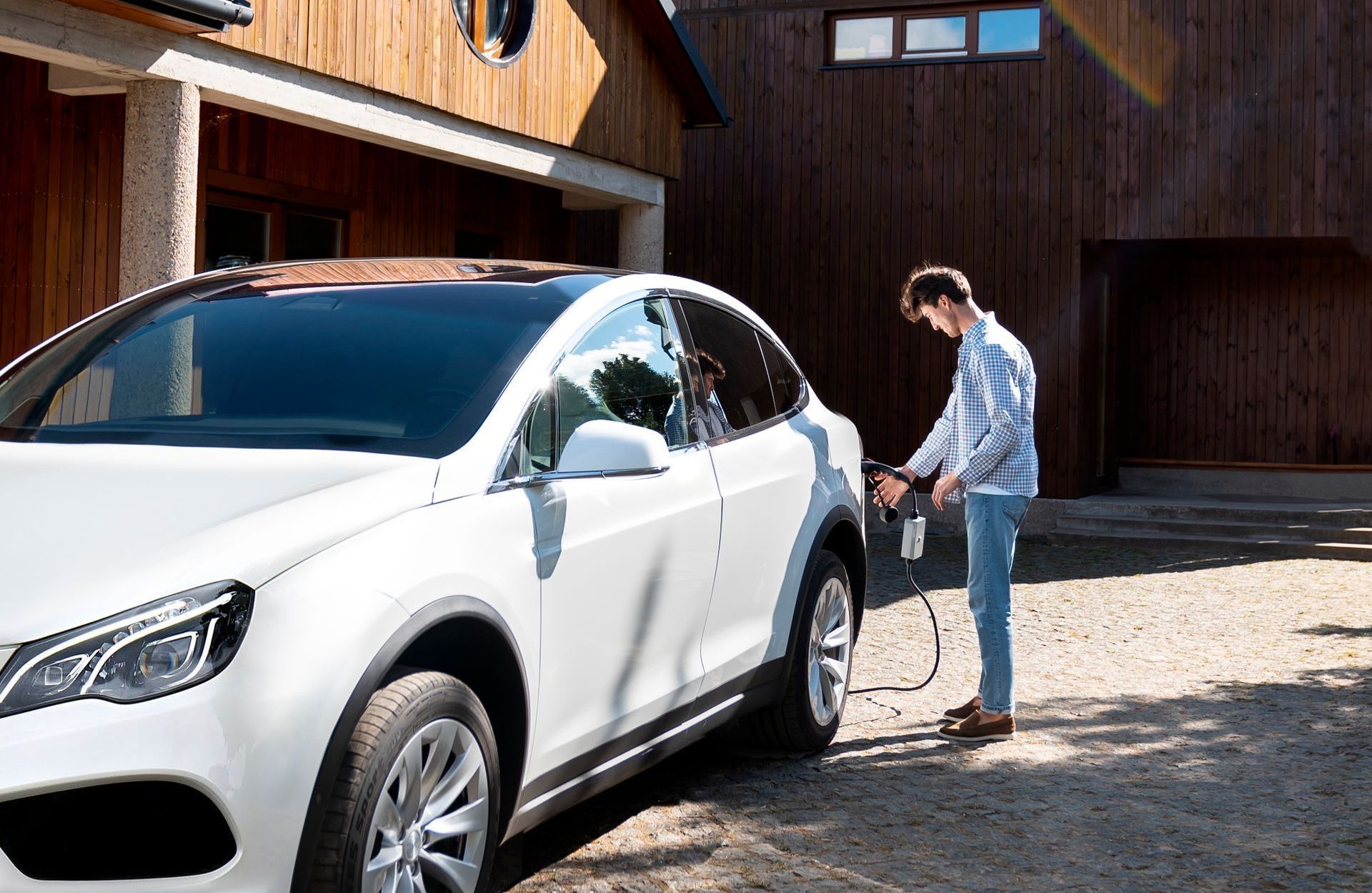
Today's EV chargers are no longer just a box on the wall that pumps electricity into your car. They're intelligent energy management devices. Here's what modern smart chargers can do:
Solar integration — Smart chargers can sync directly with your rooftop solar system, automatically drawing on excess daytime generation to charge your vehicle for free.
Off-peak scheduling — Set your charger to run during off-peak electricity hours and let it do the rest. For households on time-of-use tariffs, this alone can significantly cut your charging costs.
Real-time energy monitoring — There’s an app for everything now so I’m sure you can imagine, there’s App-based dashboards that let you track exactly how much energy you're using, when, and at what cost. You're always in control.
AI-powered charging — Some premium chargers now track wholesale electricity spot prices in real time and adjust charging behaviour automatically to ensure you're always getting the cheapest rate. AI really is taking over!!
For Homeowners: What You Need to Know
What Does Installation Actually Cost?
As of 2026, a standard home EV charger installation in Australia typically ranges from $2,000 to $3,500, covering both the unit and basic installation. If your home needs a switchboard upgrade or a longer cable run, costs can sit higher. We can assess your setup before quoting so there are no surprises.
The good news is that (most) Australian homes can support a 7kW single-phase charger without major electrical work which equates to more than enough to top up overnight for a typical daily commute.
The ROI for Homeowners
The worldwide web says charging an EV at home costs around $4–$8 per 100km, compared to $15–$25 per 100km for a comparable petrol vehicle. Over a year of average driving, that's a significant saving. Factor in lower servicing costs — no oil changes, fewer brake replacements — and the financial case for a home EV charger is looking pretty good, especially with the current fuel crisis.
For Businesses: Future-Proof Your Premises
Why Workplace Charging Is Now a Business Asset
Providing EV charging at your workplace is no longer just a nice-to-have — it's becoming a genuine competitive advantage:
Staff attraction and retention — Employees with EVs increasingly factor workplace charging into their decisions. It's a low-cost perk that carries real weight.
Fleet electrification — If your business runs vehicles, transitioning to an electric fleet is not a question of if but when. Getting your charging infrastructure sorted now puts you well ahead of the curve.
Property value — EV-ready commercial premises are increasingly preferred by tenants and buyers, making it a smart long-term investment in your asset. As Glenn always says ‘future proof your space!’
The Bottom Line
A lot has changed since 2023 — and most of it is good news. EVs are more accessible, chargers are smarter, the incentive landscape is evolving. Whether you're charging at home overnight or planning infrastructure for a commercial fleet, getting the right setup sorted now means you won't be playing catch-up later.
Give Glenn a call today. We'll walk you through your options, help you understand what incentives might apply to your situation, and get you set up properly from day one.